Driving Licence Translation for Expats and Drivers in the UK.
14 March, 2022· Artikel von David Brown


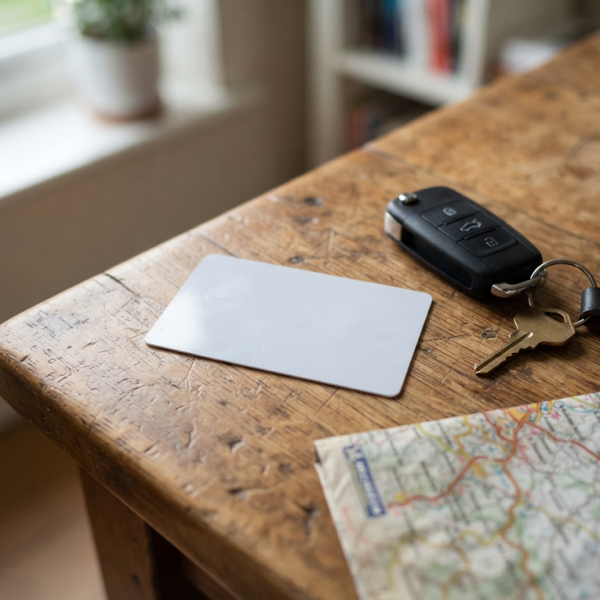
Moving to the United Kingdom with a foreign driving licence raises a quick question: will the DVLA, an insurer or a car rental desk accept it as it is? The answer depends on the country that issued the card and on the language printed on it. A licence that is not in English, or that does not use the Latin alphabet, usually needs a translation that a clerk can trust. This guide explains when it is needed and how to order it.
When a translation is requested
Insurers, employers, rental firms and licensing offices ask for an English version when the original is in another language. A translation helps them read categories, dates and restrictions without guessing. It is also useful when a licence is exchanged for a local one or used as proof of identity.
What a translated licence shows
The translation covers the holder's name, birth date, issue and expiry dates, licence number, the vehicle categories and any restrictions or endorsements. Codes on the back should be explained, since each country uses its own system. A good translator notes stamps and the position of the photo too.
Why certification matters
A plain translation can be rejected when the receiving office cannot confirm who prepared it. A signed statement of accuracy turns the text into a document that officers can accept. Many drivers choose certified translation uk providers because the format is familiar to British offices.
Drivers moving to the UK often need several kinds of translation services at once, from the driving licence to a police clearance letter, proof of address and insurance papers, and every document must use the same name and spelling. A provider that handles the whole file can keep categories, dates and names identical across every paper, so the DVLA, an insurer or a rental desk accepts them without questions. Spiralcat Translations prepares certified driving licence and identity papers for expats and drivers in the UK, with the translator's statement on every file. Ordering the full set together also keeps the wording consistent if the same papers later support a licence exchange or a vehicle purchase.
Exchange or recognition rules
Some countries have exchange agreements that let you swap a licence for a British one, while others require a test. The rules change with the country and the time spent in the UK, so check the official guidance before you order. The translation is often a supporting paper, not a replacement for the original card.
Categories and restrictions
Vehicle categories do not match from one country to another. A letter that means a car in one system may mean a motorcycle in another. The translator should keep the original codes and add a short explanation, so the reader can compare them with local classes.
Names and transliteration
If the licence uses another alphabet, the name must be written in Latin letters in the same way as in the passport. A different spelling can cause a mismatch with the identity file. Give the translator your passport page so that the form is identical in all documents.
Photocopies, scans and both sides
Send a clear colour scan of the front and the back. The back often holds categories and notes, and a translator cannot add what is not visible. Make sure that the edges of the card and any stamps are readable, and avoid glare from the plastic surface.
Related civil documents
Some applications ask for a licence together with proof of address or a clean record. If you also need a clearance letter, our guide on police clearance certificate translation explains how those papers are handled.
Ordering and timing
A licence is short, so many providers deliver it within one working day. Say at the start if you need a paper copy, a signed PDF or both. Ask when your appointment is, and order the translation before the date, so that you have time for a correction.
Choosing a provider you can verify
Look for a provider that names the translator, signs the certification and offers a way to reach them later. Ask how corrections are handled and whether one translator can handle all your documents, so that terminology and spelling stay consistent from the first page to the last.
Planning the timeline
Order the translation as soon as you have clean scans, because appointment dates and filing deadlines rarely move. Add a margin of several days for corrections, since even a short fix can take time in a busy week.
Common mistakes to avoid
Frequent problems include scans that cut off a stamp, a missing translation of the back side, names spelled in two ways and codes that were copied without any explanation. A complete scan set and a written spelling of every name remove most of these risks.
Keep an organized folder
Save each original, its translation and the certification statement together, and label them in the order of the application checklist. A tidy folder makes it simple to answer a request for more evidence within the deadline.
Ask before you translate
Check the official guide for the exact format the office accepts, such as a signed PDF or a paper copy with an original signature. A short email to the office can prevent an expensive repeat order and a second delay.
Plan for later needs
The same translated documents often support a second application, an insurance quote or a vehicle purchase. Ask the provider for extra signed copies, which is quicker than ordering again later and keeps the wording identical.
Privacy and secure handling
Identity documents contain sensitive data. Choose a provider that works under confidentiality commitments, uses secure upload and deletes files after delivery. Share only the pages that the office needs.
Where to read more
For a general overview of how licences work across countries, see the driving licence article on Wikipedia. It describes the main systems and categories.
Neueste Beiträge

Maritime and Cruise Safety Doc...

How to Translate E-Learning Co...

Brazilian Coffee Farms and Eng...

Schulstart in Deutschland mit ...

Translating Old Family Records...
Teilen Sie es.

Links
Wir verwenden Cookies
Wir verwenden Cookies, um Ihnen die beste Nutzung zu bieten, Ihre Einstellungen zu speichern und zu verstehen, wie die Website genutzt wird. Sie können alle Cookies akzeptieren, optionale ablehnen oder Kategorien einzeln wählen.
DatenschutzrichtlinieCookie-Einstellungen
Wählen Sie, welche Cookies wir verwenden dürfen. Notwendige Cookies bleiben aktiv, weil die Website ohne sie nicht funktioniert.
Weitere Informationen finden Sie in unserer Datenschutzrichtlinie.