Translating Old Family Records for Genealogy Research.
11 August, 2023· Article by Beth Smith


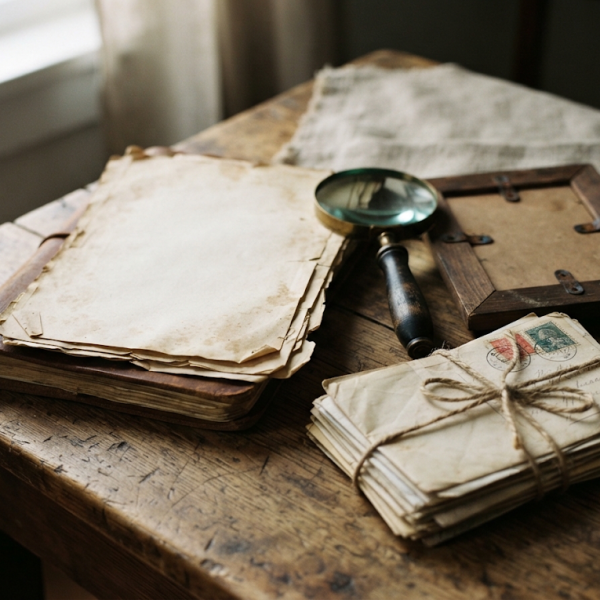
Few hobbies are as personal as tracing your family tree. A baptism record in a village church, a ship manifest, a marriage entry in a civil register or a letter tucked into a trunk can open a door to people you never met. Many of those records were written in the language of the place and the era, in handwriting that is hard even for native speakers to read. For descendants who grew up elsewhere, translation becomes the bridge between the present and the past. Genealogy translation is part language, part detective work, and the best results come from combining a careful reader with a clear research question. This guide explains how to prepare old documents and what to expect.
Start With What You Know
Before you order any translation, gather the facts you already have: names, approximate dates, places of birth, migration routes and family stories. Write them in a simple tree. This framework helps a translator interpret unclear entries and recognise the people you are looking for. Online archives such as FamilySearch hold millions of digitised records from many countries, and they are a good place to find original documents and to learn how local records are organised.
Types of Records
Typical sources include church registers of baptisms, marriages and burials, civil registration, census lists, military records, passenger lists, land and tax records, wills, court files and personal letters. Each type follows a standard layout with set phrases, and an experienced translator knows where to find the details that matter. Some records are printed forms with handwritten entries, while others are entirely handwritten in a flowing style.
The Challenge of Old Handwriting
Old scripts can look like a different alphabet. German records before the twentieth century often use styles that differ sharply from modern letters, and some letters resemble each other so closely that a name can be misread. Abbreviations are common, and spelling was not standardised, so the same surname may appear in several forms. A translator who works with genealogical sources will compare entries and use context to decide which reading is most likely, and will mark uncertain words clearly.
German Records and Place Names
German speaking regions changed borders many times, so a town may appear under several names in different periods. Records may be written in German, Latin or another language, and religious and civil entries have their own vocabulary. A specialist offering german to english translation services can help you read old entries, identify the correct place and explain terms that do not appear in a standard dictionary, such as old occupations and legal titles.
Names, Dates and Calendars
Names change over time. Spellings vary, given names may be written in Latin forms, and women may be recorded under maiden or married names. Dates can be confusing, since some countries switched calendars at different times, and religious records may list feast days instead of numbers. Ask the translator to keep the original spelling and add a note on the modern form, so that you can search other databases with both versions.
Translation Versus Transcription
These two services are different. A transcription converts the old handwriting into modern typed text in the original language, while a translation renders the meaning into another language. For difficult records, you may need both, first a transcription and then a translation. Ask for the original text beside the translation, so that you can check names and dates yourself or share them with a relative or another researcher.
What to Ask the Translator
Give a clear scope, for example whether you need the full text or only the names, dates and places. Ask the translator to mark illegible words, uncertain readings and any interpretation. Request a short summary in addition to the full translation, which makes it easier to see how the record fits your tree. For guidance on how a language pair is handled in professional work, read this article on German to English translation.
Photographs and Scan Quality
A clear image can make the difference between a confident translation and a guess. Photograph or scan documents flat, in good light, at high resolution. Include the whole page and any margin notes, because later additions may be important. If a page is faded, try taking several images in different light and share all of them. Never write on the original, and store old papers in acid-free sleeves.
Official Use and Citizenship Claims
Some people research their family history to apply for citizenship by descent or to settle an inheritance. In such cases, records must often be official copies issued by an archive, translated by a certified translator and sometimes legalised. Check the requirements of the authority that will receive the documents before you order anything. A casual translation for personal interest is cheaper, but it will not be accepted for official use.
When those old records are needed for a modern family application, families often rely on specialist immigration translation services to prepare them. The provider can produce certified translations of birth and marriage records, keep names and dates consistent with passports and current files, and add the statement of accuracy the authority requires. That way, the same records that trace the family tree also serve as proof in a reunification application.
Preserve and Share Your Findings
Keep a research log with the source, date and result of each record. Save translations together with the original images, and back up your files. Share your findings with relatives, who may add stories and photographs that bring the records to life. With careful translation and good records, the names on old pages become real people, and your family history will be ready for the next generation to read.
Recent Posts

Maritime and Cruise Safety Doc...

How to Translate E-Learning Co...
Brazilian Coffee Farms and Eng...
Share it.
Links
We use cookies
We use cookies to give you the best online experience, remember your preferences, and understand how the site is used. You can accept all cookies, reject optional ones, or choose which categories to allow.
Privacy PolicyCookie preferences
Choose which cookies we can use. Necessary cookies stay on because the site cannot work without them.
For more details, read our Privacy Policy.